Climate Change and Children: Building Resilient Futures Together
When conversations turn to climate change, we often picture rising sea levels, melting glaciers or record-breaking temperatures.
But for millions of children, the climate crisis is experienced in far more personal ways.
It is the empty plate after a failed harvest. The missed weeks of school after a flood. The long walk to collect safe drinking water. The uncertainty of watching parents struggle to rebuild after every climate-related disaster.
Children contribute the least to the climate crisis, yet they are among those who bear its greatest burden.
For families already living with limited resources, climate change is not a distant environmental issue. It shapes everyday life, influences opportunities and affects a child's ability to grow, learn and thrive.
When Climate Change Reaches the Classroom
Around the world, climate-related events are becoming more frequent and more intense.
For children living in vulnerable communities, these events can interrupt almost every aspect of childhood.
A failed monsoon may reduce a family's harvest, leaving less food on the table. Floods can damage homes, contaminate drinking water and force schools to close. Droughts make it harder for families to earn a living, while repeated disasters can leave communities struggling to recover before the next crisis arrives.
The effects are especially significant for children.
When household incomes decline, families may have difficult decisions to make. Nutritious meals become less frequent. School attendance may suffer as children help support household livelihoods or cope with displacement. Access to healthcare becomes more challenging when communities are affected by extreme weather.
These experiences are not isolated events.
They influence a child's health, education, protection and emotional wellbeing, shaping opportunities both today and in the future.
Children on the Frontline of the Climate Crisis
The scale of the challenge is immense.
According to UNICEF's Children's Climate Risk Index, one billion children, around half of the world's child population, live in countries considered to be at extremely high risk from the impacts of climate change.
South Asia is one of the regions where these risks are most pronounced.
Home to approximately 627 million children under the age of 18, the region faces increasing exposure to climate-related hazards. Within South Asia, Pakistan ranks 14th globally on the Climate Risk Index, while Bangladesh and Afghanistan share the 15th position. India ranks 26th, reflecting the significant climate-related risks faced by millions of children across the country. Nepal, Sri Lanka and Bhutan also experience varying levels of climate vulnerability that continue to affect children's lives.
Behind these figures are real families.
A child who misses weeks of school because classrooms have been damaged by flooding.
A family whose crops fail after months without rain.
A community rebuilding homes after another severe weather event.
For children, climate change is not measured only by changing weather patterns.
It is measured by interrupted childhoods.
Building Resilience, One Community at a Time
While the challenges are significant, communities are not facing them alone.
Across India, World Vision India works alongside families to strengthen resilience before disasters occur, helping communities adapt to changing environmental conditions while protecting children's wellbeing.
This includes supporting sustainable livelihoods that reduce vulnerability to climate-related shocks, improving access to safe water, strengthening community preparedness and promoting practices that help families manage changing weather patterns more effectively.
These efforts recognise an important truth.
Children flourish when the communities around them are resilient.
When parents have stable livelihoods, children are more likely to remain in school. When families have access to clean water, health risks are reduced. When communities are prepared for disasters, children are better protected during times of crisis.
Climate resilience is not only about responding to emergencies.
It is about creating conditions in which children can continue learning, growing and dreaming, even when faced with environmental uncertainty.
Protecting Child Development in a Changing Climate
Child development depends on more than education alone.
It requires good health, proper nutrition, protection from harm and opportunities to participate in decisions that affect everyday life.
Climate change places each of these areas under pressure.
Food insecurity can affect children's physical growth and cognitive development. Unsafe water increases the risk of disease. Disrupted education limits future opportunities. Economic hardship may expose children to unsafe forms of labour or other protection risks.
Supporting families before these challenges become crises helps create sustainable change that benefits children over the long term.
Strengthening agriculture, improving water access, promoting disaster preparedness and building resilient communities all contribute to healthier childhoods and stronger futures.
The impact extends well beyond individual families.
As communities become more resilient, they are better equipped to withstand future climate shocks, creating lasting community impact for generations to come.
A Future Where Every Child Can Thrive
The climate crisis is often described through statistics and scientific reports.
Yet it's true impact is found in the everyday experiences of children.
It is seen in whether they have enough to eat, whether they can continue their education after a disaster and whether they grow up in communities equipped to face an uncertain future.
Children deserve more than survival.
They deserve the opportunity to learn, play, stay healthy and pursue their dreams without carrying the invisible weight of a changing climate.
By supporting programmes that strengthen families and build resilient communities, we can help create a future where children are protected from climate shocks and given the opportunity to reach their full potential.
Because when communities become stronger, children do too, and that is where lasting, sustainable change begins.
Kiran's Inspiring Journey to Canada
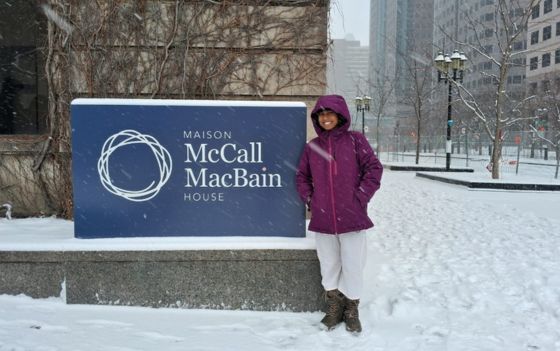
Kiran's story is pure inspiration! Growing up in Kolkata she juggled family and studies. “Having to raise three children wasn’t easy for my parents, but World Vision India supported my education and helped me discover my passion for social issues.” World Vision India’s Snehadeep community project and Play for Peace programme, conducted workshops on life skills, street plays, and puppet shows which became platforms for her to find her voice.