How a Bicycle Helped Girls Stay in School: An Education Transformation Story from Rural Odisha
Every morning, before the first school bell rang, Arushi Khilla faced a journey that many children never have to think about.
Living in a remote village in Borigumma, Odisha, she walked long distances to reach school. The route was not only exhausting but often frightening. Isolated roads, forest paths, and the constant fear of harassment or encounters with wild animals turned what should have been a simple journey into a daily challenge. While other children prepared for lessons and activities, Arushi had to focus first on completing a difficult journey safely.
For Arushi and many other girls in her community, education was becoming increasingly difficult to pursue. Despite their determination to learn, the physical and emotional burden of travelling long distances every day often affected their ability to attend school regularly and fully participate in their studies.
When the Road to School Becomes a Barrier
In many remote areas of Borigumma, access to education remains a challenge, especially for adolescent girls. Schools are often located far from villages, and transportation options are limited. For families already facing financial hardship, ensuring regular school attendance can be difficult.
Twenty girls from vulnerable households were at risk of dropping out. Long walks left them exhausted before classes even began. Arriving late meant missing lessons, while irregular attendance made it harder to keep up academically. Over time, these challenges affected their confidence, motivation, and educational progress.
Access to education remains one of the most important factors in breaking the cycle of poverty. However, education for poor children is often affected by practical challenges such as distance, safety concerns, and limited transport facilities. Addressing these barriers is essential for ensuring quality education for poor children and creating equal opportunities for every child to learn, grow, and achieve their potential.
The challenge extended beyond academics. Many parents worried about their daughters travelling alone on isolated routes. Safety concerns, combined with social attitudes about girls' education, often influenced decisions about whether girls should continue their studies. As attendance became irregular, the risk of leaving school altogether increased.
Stories like Arushi’s are powerful NGO impact stories because they highlight how poverty, distance, and safety concerns can affect education for poor children. They also demonstrate how practical solutions can create education transformation stories that help children remain in school and build brighter futures.
A Simple Solution with Meaningful Impact
To address this challenge, World Vision India’s Borigumma Area Programme supported 20 girls with bicycles. The solution was simple, but its impact was significant.
The bicycles reduced travel time and physical exhaustion. What once took hours on foot became a manageable daily commute. The girls could now reach school on time, with more energy and confidence. Travelling together also helped them feel safer during their journey.
For parents, the bicycles brought reassurance. Their daughters spent less time on isolated routes and could return home earlier. This increased confidence among families and encouraged them to continue supporting their daughters' education.
Teachers also observed positive changes. Improved attendance and punctuality helped students participate more actively in class, complete assignments consistently, and engage more effectively in learning activities.
This is one of many community change stories that demonstrates how a simple intervention can create lasting impact. By removing barriers to education, communities can support child development, strengthen confidence in girls' education, and contribute to sustainable community development.
Arushi’s Journey Towards Confidence
For Arushi, the bicycle arrived at a crucial time in her life. As an orphan, she had already faced significant challenges in pursuing her education. The long walk to school often left her tired, affecting both her attendance and her ability to complete homework.
Receiving a bicycle transformed her daily routine. She could now reach school faster, return home earlier, and dedicate more time to studying. The support helped her focus better on her lessons and participate more actively in school activities.
"I am an orphan, but I feel fortunate that World Vision India, Borigumma ADP, has always supported me," says Arushi. "Earlier, the long walk to school left me tired and affected my homework and attendance. Receiving a bicycle has greatly helped my education and made learning easier."
Her experience reflects the resilience of many girls in Borigumma who continue to pursue their education despite difficult circumstances. These are women empowerment success stories in the making because when girls remain in school, they gain confidence, knowledge, and opportunities that can positively influence their future.
From Barriers to Better Opportunities
The bicycle initiative also connects to broader poverty-to-prosperity stories. Education creates opportunities that can help children and families build better futures. When girls remain in school, they are more likely to develop the skills and knowledge needed to pursue employment, contribute to their communities, and make informed decisions throughout their lives.
Initiatives that improve school access are often part of a wider rural education program designed to help children stay in school and achieve their full potential. They also contribute to sustainable community development by encouraging families to prioritise learning and by creating environments where girls can continue their education with confidence.
By helping empower girls' education, such efforts create long-term benefits not only for individual children but also for families and communities.
Creating Sustainable Change
Today, each bicycle carries more than one student. It carries determination, hope, and the possibility of a brighter future.
As the girls of Borigumma ride to school each morning, their journey is no longer defined by distance or fear. Instead, it is a pathway towards learning, confidence, and opportunity.
For organisations working as an NGO for Children in India, improving access to education is about more than providing resources. It is about understanding the everyday challenges children face and responding with practical solutions that help them remain in school.
Stories like Arushi’s remind us that meaningful change often begins with simple actions. By addressing barriers to education and supporting children to continue learning, communities can create lasting opportunities for future generations.
For Arushi and the other girls, the bicycle represents more than transportation. It represents access to education, confidence in their abilities, and a chance to pursue their dreams. What started as a simple solution has become a powerful example of how small interventions can create lasting change in children's lives.
Kiran's Inspiring Journey to Canada
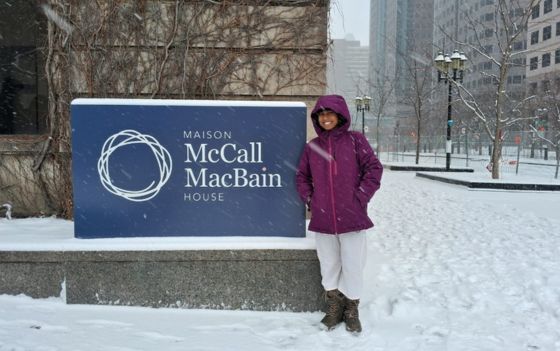
Kiran's story is pure inspiration! Growing up in Kolkata she juggled family and studies. “Having to raise three children wasn’t easy for my parents, but World Vision India supported my education and helped me discover my passion for social issues.” World Vision India’s Snehadeep community project and Play for Peace programme, conducted workshops on life skills, street plays, and puppet shows which became platforms for her to find her voice.